On the ground
Health and safety in Bali: water, mosquitoes, animals, ocean, road
The real risks in Bali are rarely the ones you imagine. They are the water, mosquitoes, animals, the ocean and the road. All can be prevented with a few simple habits.
- Updated on
- 6 min read
- By Kylian Dev
Contents
Key points
- Tap water is not drinkable: bottled water or refill dispensers.
- Dengue is transmitted by mosquitoes that bite during the day; there is no specific treatment.
- Rabies is present in dogs and macaques: if bitten, see a doctor immediately.
- See a doctor 6 to 8 weeks before departure for vaccines, including rabies and Japanese encephalitis.
This guide does not replace medical advice. It brings together the precautions that really matter, in the order in which they concern the most travelers: food, mosquitoes, animals, the sea and the road.
For the rules of riding a scooter, see renting a scooter in Bali and getting around Bali; for the rainy season and its mosquitoes, when to go to Bali.
Water and food: avoiding Bali belly
Tap water is not drinkable in Bali: drink bottled water or water from refill dispensers, and brush your teeth with it. Digestive problems, nicknamed Bali belly, mostly come from water and badly stored food. Eat hot food, where turnover is high, and wash your hands often.
| Category | Fairly safe | Caution |
|---|---|---|
| Water | Sealed bottles, dispensers in accommodation | Tap water, including for brushing teeth |
| Ice | Factory-made hollow cylinder ice | Crushed ice of unknown origin |
| Dishes | Cooked to order, served hot | Lukewarm buffets, dishes left out |
| Fruit | Fruit you peel yourself | Pre-cut fruit on display |
| Places | Busy warung with high turnover | Empty stalls, visibly doubtful hygiene |
In case of digestive problems, the main thing is to drink a lot, with rehydration salts. If the fever rises, if the symptoms last or if there is blood, see a doctor.
A realistic first-aid kit for Bali
A useful kit fits in a small pouch: rehydration salts, an antidiarrheal on medical advice, a painkiller, disinfectant and plasters, a mosquito repellent suited to the tropics, sunscreen and your usual medication with the prescription. The rest can be found in the pharmacies of the south and Ubud.
- Oral rehydration salts.
- Painkiller and fever reducer, taking into account the risk of dengue (ask your doctor for advice).
- Disinfectant, plasters and bandages, useful after a fall or a cut on coral.
- Repellent suited to tropical areas and covering clothes for the evening.
- Sunscreen and a hat: the sun is strong, even when it is overcast.
- Your personal medication, in sufficient quantity, with the prescription.
Dengue and mosquitoes in Bali
Dengue is present in Bali. It is transmitted by mosquitoes that bite during the day, not only in the evening. There is no specific treatment: prevention relies on repellent, covering clothes and a mosquito net. In case of fever during or after the stay, see a doctor without delay.
- Apply repellent during the day too, especially in the shade and near vegetation.
- Step up protection in the rainy season, when there are more mosquitoes.
- Tell your doctor about your trip if a fever appears after your return.
Rabies: macaques and dogs
Rabies is present in Bali in dogs and macaques, notably in the monkey forests. Do not stroke animals and do not feed the monkeys. In case of a bite or a scratch, wash the wound for a long time with soap and water, then see a doctor immediately.
- Wash the wound thoroughly with soap and water.
- Disinfect.
- Go to a clinic immediately, without waiting for symptoms to appear.
- Notify your travel insurance.
The temple macaques, notably in Uluwatu and in the monkey forests, are used to visitors and attracted by food and shiny objects. Put everything away in a closed bag and keep your distance.
The ocean: currents, flags, jellyfish and surfing
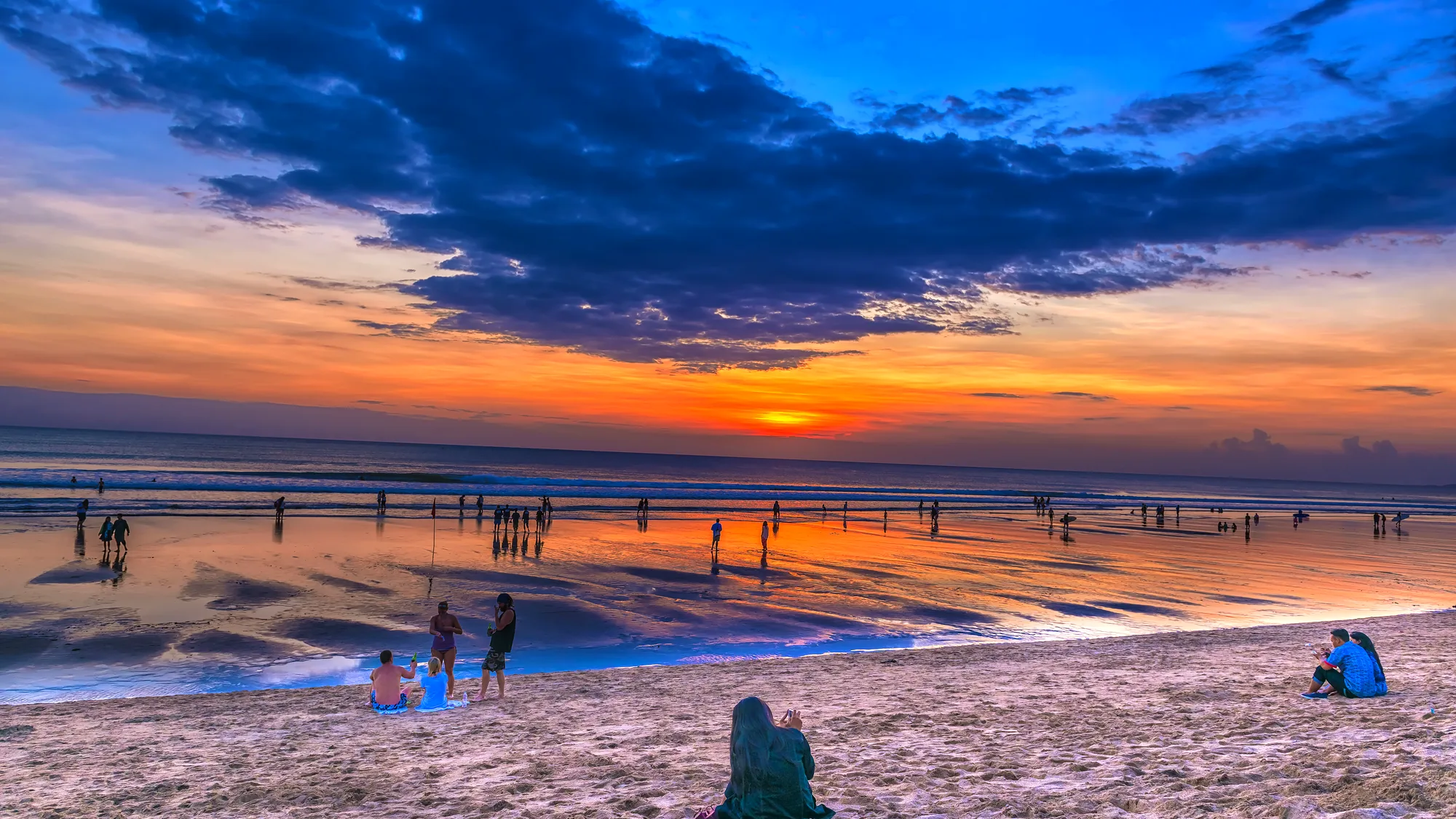
The Indian Ocean is powerful. Rip currents are the main danger on the beaches of the west coast and the Bukit. Respect the flags and the supervised areas, do not swim alone or after drinking. On a reef, protect yourself from cuts. As a beginner surfer, take a lesson.
- Red and yellow flags: supervised area where swimming is advised.
- Red flag: swimming forbidden or not advised.
- Caught in a current, do not fight it: swim parallel to the beach, then come back.
- Jellyfish: some periods bring them; ask locally and rinse with seawater if stung.
- Reefs: reef shoes advisable, and coral cuts must be disinfected carefully.
Calmer beaches, such as those of Sanur, are better suited to families and inexperienced swimmers.
Sun, heat and dehydration in Bali
In the tropics, the sun burns quickly, even when it is overcast, and the humid heat makes you lose a lot of water. Drink regularly, without waiting until you are thirsty, protect yourself in the middle of the day and adapt your effort: a hike or a day of surfing dehydrates you more than you think.
- Hat, sunglasses and sunscreen, reapplied after each swim.
- A UV-protective T-shirt for snorkeling, where your back stays exposed for a long time.
- A water bottle, refilled at the dispensers in your accommodation.
- Rehydration salts after a day of exertion or a digestive episode.
Children and older people are the most exposed. Headache, nausea, unusual tiredness: get into the shade, drink and rest. If the symptoms persist, see a doctor.
Scooter accident in Bali: what to do
The scooter is the main road risk for visitors, especially beginners. Without an international permit, insurance may refuse to cover you. In case of an accident: get to safety, have your injuries treated, notify your insurance before any major expense and photograph the scene and the vehicles.
- Get yourself and others to safety, off the road.
- Have injuries treated, even minor ones: wounds get infected quickly in a humid climate.
- Call your insurance’s assistance line to be directed to a medical facility.
- Photograph the scene, the vehicles and the papers exchanged.
- Notify the scooter rental company.
The rules for renting and riding are detailed in the guide getting around Bali.
Travel insurance: what must be covered
Travel insurance for Bali must cover medical and hospital costs abroad, repatriation, and the activities you plan: scooter, diving, surfing, hiking. Check the exclusions, notably riding without a valid license, and whether the assistance provider pays costs directly.
- Medical and hospital costs, with a high ceiling.
- Medical repatriation.
- The sports you plan to do.
- Exclusion conditions: alcohol, riding without a license, undeclared activities.
- An assistance number reachable at all times, saved in your phone.
Useful numbers and medical care on the island
Before leaving, save in your phone your insurance’s assistance number, the address of your accommodation and the contact details of your country’s embassy in Jakarta. On the island, international clinics are mostly in the south and in Denpasar. For emergencies, check the numbers on your government’s travel advice page before departure.
- Your insurance’s assistance line: the first call in case of a serious medical problem.
- Your accommodation: it knows the nearest clinic and can call for transport.
- Your country’s embassy in Indonesia, and its consular office in Bali if there is one: for a lost passport or a serious situation.
- Official travel advice (for example France Diplomatie’s Indonesia page): emergency numbers and up-to-date recommendations.
Frequently asked questions
Can you drink tap water in Bali?
No. Drink bottled water or water from the refill dispensers in your accommodation, and use it to brush your teeth too.
Which vaccines for Bali?
Routine vaccines up to date, plus hepatitis A and typhoid. Rabies and Japanese encephalitis are to be discussed with a doctor 6 to 8 weeks before departure.
What to do about Bali belly?
Drink a lot, with rehydration salts, and eat light. See a doctor if the fever rises, if the symptoms last or if there is blood.
What to do after a monkey bite in Bali?
Wash the wound for a long time with soap and water, disinfect, then go to a clinic immediately: rabies is present in Bali.
Is Bali a safe destination?
The main risks are health and road risks more than crime. Check official travel advice, such as France Diplomatie’s, before departure.
Sources
Figures and rules checked on October 17, 2026 against the sources below. Entry rules and fees change: always check them on the official websites before you leave.