Planning
Best time to visit Bali: seasons, weather and crowds month by month
Bali can be visited all year round. The real question is not “when is the weather good”, but what you are coming to do, where you are sleeping, and whether you accept sharing the island with the school holidays.
- Updated on
- 7 min read
- By Kylian Dev
Contents
Key points
- Dry season from about April to October, rainy season from about November to March.
- In the rainy season, showers often fall late in the day: mornings remain usable.
- The south, Ubud and the north do not have the same weather on the same day: you also choose your season by region.
- Nyepi, in early March 2027 (official date to be confirmed), closes the airport for 24 h.
Climate tables give averages; they say little about what you experience on the ground. In Bali, two factors count more than rain: the crowds, which follow European and Australian holidays, and the religious calendar, which transforms the island several times a year.
This guide breaks the year down month by month, then gives the best period for your plans. To compare the twelve months at a glance and filter by what you are coming to do, use the month comparison tool. To adapt the budget to the season, see the guide Bali travel budget.
Bali’s real weather: two seasons and microclimates
Bali has a dry season from about April to October and a rainy season from about November to March. But the island is mountainous: the south stays drier and hotter, Ubud is more humid, and the northern highlands, around Munduk, are cool and often in the clouds.
The terrain makes the weather. Clouds coming in from the ocean run into the volcanic range in the center: it rains more on the slopes and around the lakes than on the Bukit peninsula. A grey day in Munduk can be a beach day in Uluwatu.
- The south (Uluwatu, Canggu, Sanur): the driest, sunniest and hottest.
- Ubud and the center: more humid, as the vegetation shows. Evenings are milder there.
- The north and the lakes: cool, misty, with more frequent rain. Bring a warm layer for the evening.
- The east (Sidemen, Amed): contrasted, between the humid valleys and the drier coast.
Bali month by month: rain, crowds, prices and events
The most balanced months are often those at the end of the rainy season and the start of the dry season, as well as September and October: dry weather, rice fields still green, moderate crowds. July, August and the end-of-year holidays combine crowds and high prices.
| Month | Rain | Crowds | Prices | Good to know |
|---|---|---|---|---|
| January | Rainy season | Heavy at the start of the month, then moderate | High then average | Tail end of the year-end holidays |
| February | Rainy season | Low | Low | Very green rice fields, sea sometimes rough |
| March | End of the rainy season | Low | Low | Nyepi in early March 2027, date to be confirmed |
| April | Transition to dry | Moderate | Average | Good compromise between green and dry |
| May | Dry season | Moderate | Average | Often cited as one of the best months |
| June | Dry season | Rising | Average to high | Start of the holidays in several countries |
| July | Dry season | Heavy | High | Book early, especially in Uluwatu and Ubud |
| August | Dry season | Heavy | High | Busiest time of the year |
| September | Dry season | Moderate | Average | Dry weather, crowds thinning out |
| October | End of the dry season | Moderate | Average | Heavier heat at the end of the month |
| November | Start of the rains | Low | Low | Showers late in the day |
| December | Rainy season | Low then very heavy | Low then high | Year-end holidays in high demand |
Prices follow demand more than the weather. The same room can cost noticeably more in August than in February. In low season, mid-range accommodation becomes affordable and can sometimes be negotiated on the spot.
The best time for Bali depending on your plans
For surfing on the west coast and the Bukit, aim for the dry season. For diving, the dry season generally offers better visibility. For very green rice fields, the end of the rainy season. For hiking, the dry season. With a family, school holidays often mean July-August: book early.
Surfing
In the dry season, the Bukit spots (Uluwatu, Padang Padang, Bingin) work best. In the rainy season, the east coast, around Keramas, takes over.
Diving and snorkeling
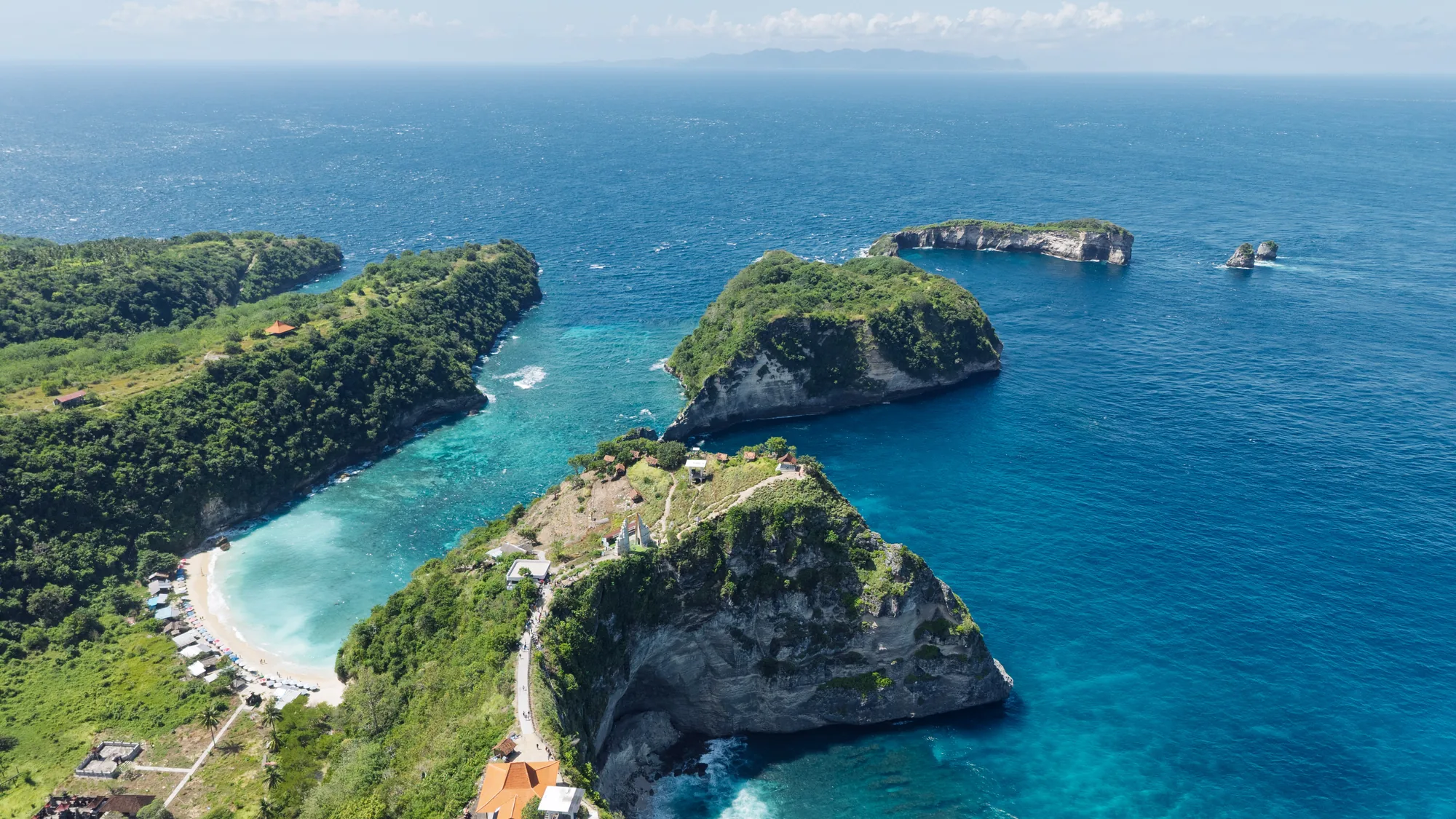
Amed, Tulamben and Nusa Penida are suited to diving all year round; the dry season generally brings clearer water and a calmer sea.
Green rice fields
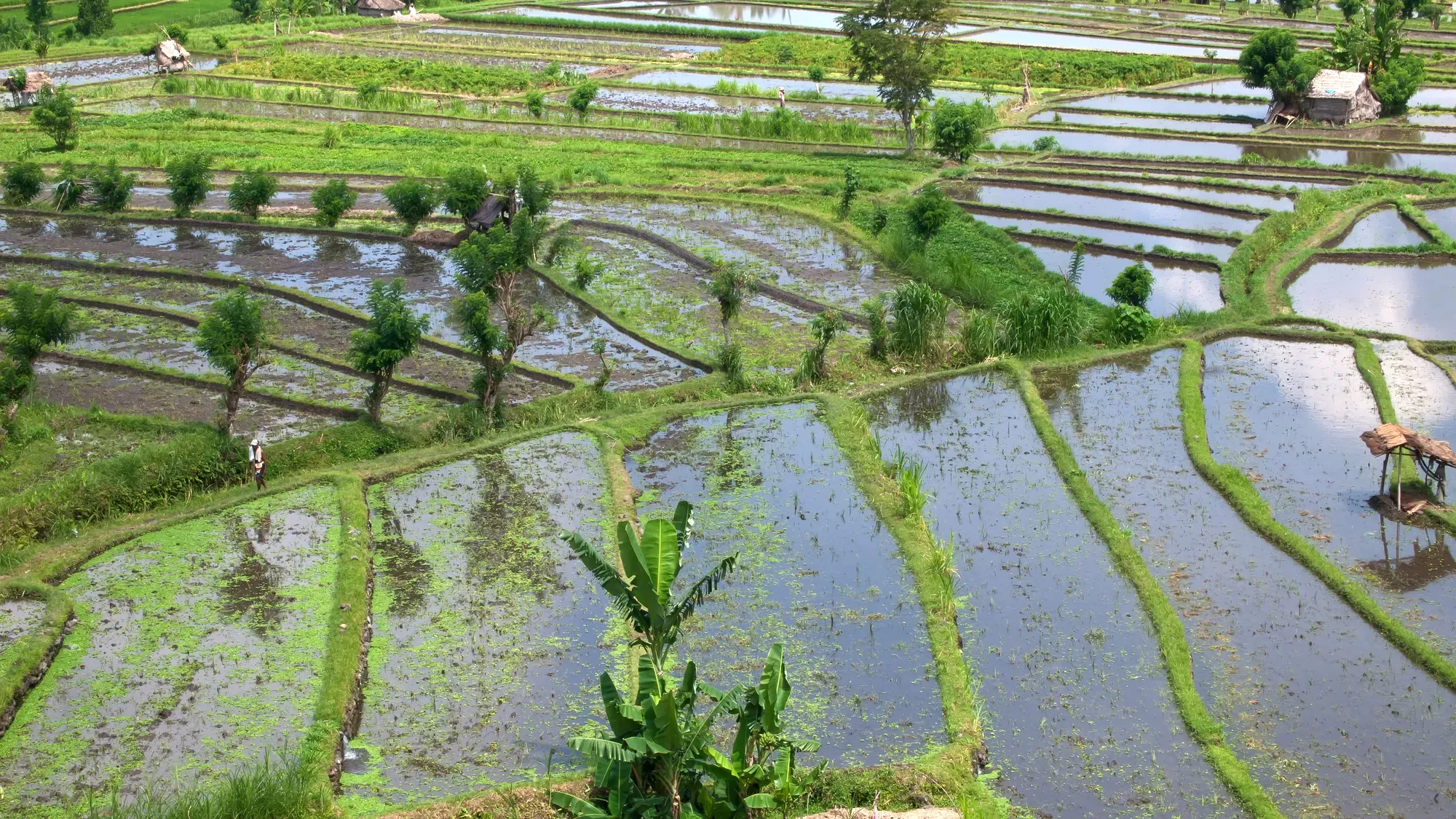
The green depends on the growing cycle, which differs from one valley to the next. The end of the rainy season often offers the most lush landscapes.
Hiking and volcanoes
Batur and the walks of Munduk or Sidemen need dry trails. In the rainy season, the summits are often in the clouds at sunrise.
Families
The summer holidays coincide with the dry season, but also with the crowds. Sanur and Ubud stay calmer than Canggu or Seminyak.
To know what to do once there depending on the region, see things to do in Bali.
Nyepi, the day of silence: the airport closed for 24 h
Nyepi, the Balinese new year, is a day of total silence. For 24 h, the airport suspends its flights, nobody travels, lights stay dimmed and many fast. In 2027, Nyepi falls in early March; sources hesitate between 8 and 9 March, and the official date is still to be confirmed.
The date of Nyepi follows the Balinese lunar calendar: it is the day after the new moon of the ninth month. It therefore changes every year. The day before, villages parade ogoh-ogoh, large effigies of demons, before burning them.
- No flight arrives or leaves for 24 h: check your dates before buying a ticket.
- Travelers stay in their accommodation, which generally provides meals.
- No loud music, dimmed lights in the evening: the rule also applies to visitors.
Galungan and Kuningan: when the villages dress up
Galungan celebrates the victory of dharma over adharma; the ancestors are believed to come back to visit their families. Kuningan closes this period. The streets fill with penjor, tall decorated bamboo poles, and the temples come alive. Their dates follow the Balinese calendar and change every year.
For a traveler, these festivals are an opportunity: processions, offerings, ceremonial dress. Some offices and shops close, and Balinese people go back to their village. Expect slower journeys and stay discreet near the temples.
The meaning of these festivals and how to behave during them are detailed in our guide Balinese temples and culture.
Going to Bali in the rainy season: what really changes
In the rainy season, it does not rain all day. Showers are often heavy and concentrated in the late afternoon or evening. You make the most of the mornings, pay less and meet fewer people. On the other hand: slippery roads, a sometimes rough sea, more mosquitoes.
- Organize visits and walks in the morning, keep the afternoon for the pool, a massage or a café.
- Avoid the scooter in a downpour: the roads become slippery and visibility drops.
- Step up protection against mosquitoes, which carry dengue.
- Stay flexible for boats to Nusa Penida, which can be canceled in rough seas.
Month by month: the 12 detailed pages
Each month has its page: climate normals from the airport weather station, sea conditions, rice fields, hikes, crowds, prices, events and traveler profiles. The grid below sums up the maximum temperature, rain, rainy days and our verdict; click on a month for the details.
| Month | High °C | Rain mm | Days | Verdict |
|---|---|---|---|---|
| January: Bali in January | 30.9 | 388.4 | 18.8 | Rainy |
| February: Bali in February | 30.9 | 298.7 | 16.5 | Rainy |
| March: Bali in March | 31.0 | 213.9 | 13.3 | Transition |
| April: Bali in April | 31.0 | 114.5 | 8.8 | Compromise |
| May: Bali in May | 30.5 | 72.8 | 6.5 | Balanced |
| June: Bali in June | 29.8 | 50.8 | 4.7 | Dry |
| July: Bali in July | 29.0 | 29.7 | 3.3 | Crowded |
| August: Bali in August | 29.1 | 16.1 | 1.9 | Crowded |
| September: Bali in September | 30.0 | 40.7 | 2.8 | Dry |
| October: Bali in OctoberThis month | 31.0 | 67.9 | 4.8 | Favorable |
| November: Bali in November | 31.6 | 149.4 | 10.3 | Transition |
| December: Bali in December | 30.8 | 299.3 | 15.9 | Rainy |
To filter the months by your plans, surfing, diving, rice fields, hiking or family, use the month comparison tool.
Frequently asked questions
What is the best month to go to Bali?
There is no single one. May, June and September often combine dry weather and moderate crowds. July and August are dry but very busy.
Can you go to Bali in November?
Yes. It is the start of the rainy season: showers often late in the day, lower prices, few crowds. Plan active mornings and a flexible schedule.
What is the date of Nyepi in 2027?
Early March 2027. Sources differ between 8 and 9 March: check the official date before booking a flight around that period.
Is it cooler in Ubud or in the south?
Ubud is a little cooler and more humid than the south. The real cool is found higher up, around Munduk and the lakes, especially in the evening.
Does the rainy season prevent snorkeling?
No, but the sea can be rougher and the water less clear after heavy rain. Amed, on the east coast, often remains suitable.
Sources
Figures and rules checked on October 17, 2026 against the sources below. Entry rules and fees change: always check them on the official websites before you leave.