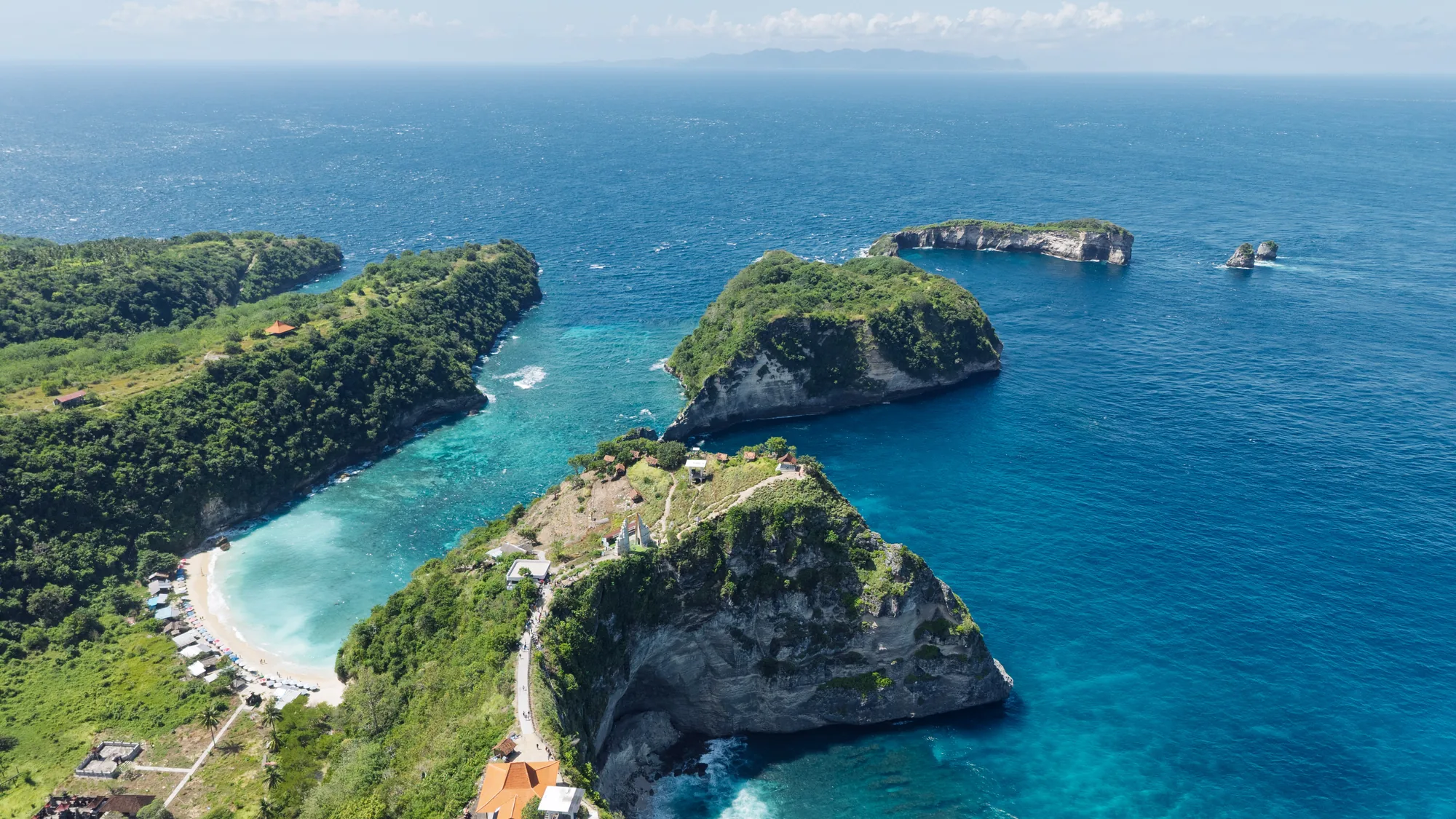
When to go · Month by month
Bali in January: weather, crowds, prices and what to know
January is the heart of the rainy season in Bali. It is hot, the air is heavy, showers are frequent and sometimes long. In return, the island is an intense green, the crowds drop after the first week and accommodation prices come back down. A good month for Ubud and the rice fields, provided you keep a flexible program.
- Updated on
- Verdict: rainy
- 6 min read
- By Kylian Dev
Contents
The month at a glance
- Temperatures: 30.9 °C average high, 27.9 °C mean, 25.1 °C average low (1991–2020 normals, Ngurah Rai airport).
- Rain: 388.4 mm on average over the month, spread over 18.8 rainy days.
- Crowds: heavy until the first days of January (end of the holidays and French school vacations), then moderate.
- Verdict: the best month to see the island very green and pay less than over the holidays; the worst for diving and the volcanoes.
Should you come to Bali in January? Yes, if you accept the rain: it is the wettest month of the year, with 388.4 mm and 18.8 rainy days on average. It is 30.9 °C in the afternoon. Mornings are often still usable, the crowds drop after the holidays and the rice fields are at their greenest.
January is not experienced like July. You organize your days around the weather, choose bases where the rain is less of a nuisance, and keep sheltered alternatives. The figures below come from the climate normals of the airport station; the rest relies on our best time to visit Bali guide.
January weather, in figures
January totals 388.4 mm of rain on average at the airport, the highest total of the year, over 18.8 days. Temperatures vary little: 25.1 °C at night, 30.9 °C in the afternoon. The humidity makes the heat heavier than in the dry season.
| Normal | December | January (this month) | February |
|---|---|---|---|
| Average high | 30.8 °C | 30.9 °C | 30.9 °C |
| Mean temperature | 27.9 °C | 27.9 °C | 27.9 °C |
| Average low | 25.3 °C | 25.1 °C | 25.0 °C |
| Rain | 299.3 mm | 388.4 mm | 298.7 mm |
| Rainy days | 15.9 | 18.8 | 16.5 |
| Sunshine | not published | 197.0 h | 190.4 h |
In practice, mornings are often clear or only hazy, and showers tend to break in the afternoon or evening, heavy and brief. But January also has spells of overcast skies and continuous rain for several days in a row. Ubud and the center get more water than the south; the Munduk highlands often stay in the clouds.
Compared with December (299.3 mm, 15.9 days), January is markedly wetter, for almost identical temperatures. February stays in the same season, but with markedly less water (298.7 mm): every week that passes works in the traveler’s favor.
| Month | High °C | Rain mm | Days | Verdict |
|---|---|---|---|---|
| JanuaryThis page | 30.9 | 388.4 | 18.8 | Rainy |
| February: Bali in February | 30.9 | 298.7 | 16.5 | Rainy |
| March: Bali in March | 31.0 | 213.9 | 13.3 | Transition |
| April: Bali in April | 31.0 | 114.5 | 8.8 | Compromise |
| May: Bali in May | 30.5 | 72.8 | 6.5 | Balanced |
| June: Bali in June | 29.8 | 50.8 | 4.7 | Dry |
| July: Bali in July | 29.0 | 29.7 | 3.3 | Crowded |
| August: Bali in August | 29.1 | 16.1 | 1.9 | Crowded |
| September: Bali in September | 30.0 | 40.7 | 2.8 | Dry |
| October: Bali in October | 31.0 | 67.9 | 4.8 | Favorable |
| November: Bali in November | 31.6 | 149.4 | 10.3 | Transition |
| December: Bali in December | 30.8 | 299.3 | 15.9 | Rainy |
What January changes on the ground
The sea is rougher and less clear, especially on the west coast. The rice fields are full of water or green depending on the valley. The volcanoes are often in the clouds at sunrise. Roads become slippery and the waterfalls, powerful and muddy, sometimes close after heavy rain.
- Swimming: possible, but stronger waves and currents on the west coast, from Kuta to Canggu. The beaches on this coast often receive litter washed up by the sea in the rainy season. Sanur, protected by its reef, stays calmer.
- Snorkeling and diving: reduced visibility after heavy rain. Amed and Tulamben, on the drier east coast, remain the most reliable; crossings to Nusa Penida can be cancelled in rough seas.
- Surf: the west coast and the Bukit are less consistent; it is the east coast’s season, around Keramas and the Sanur reefs.
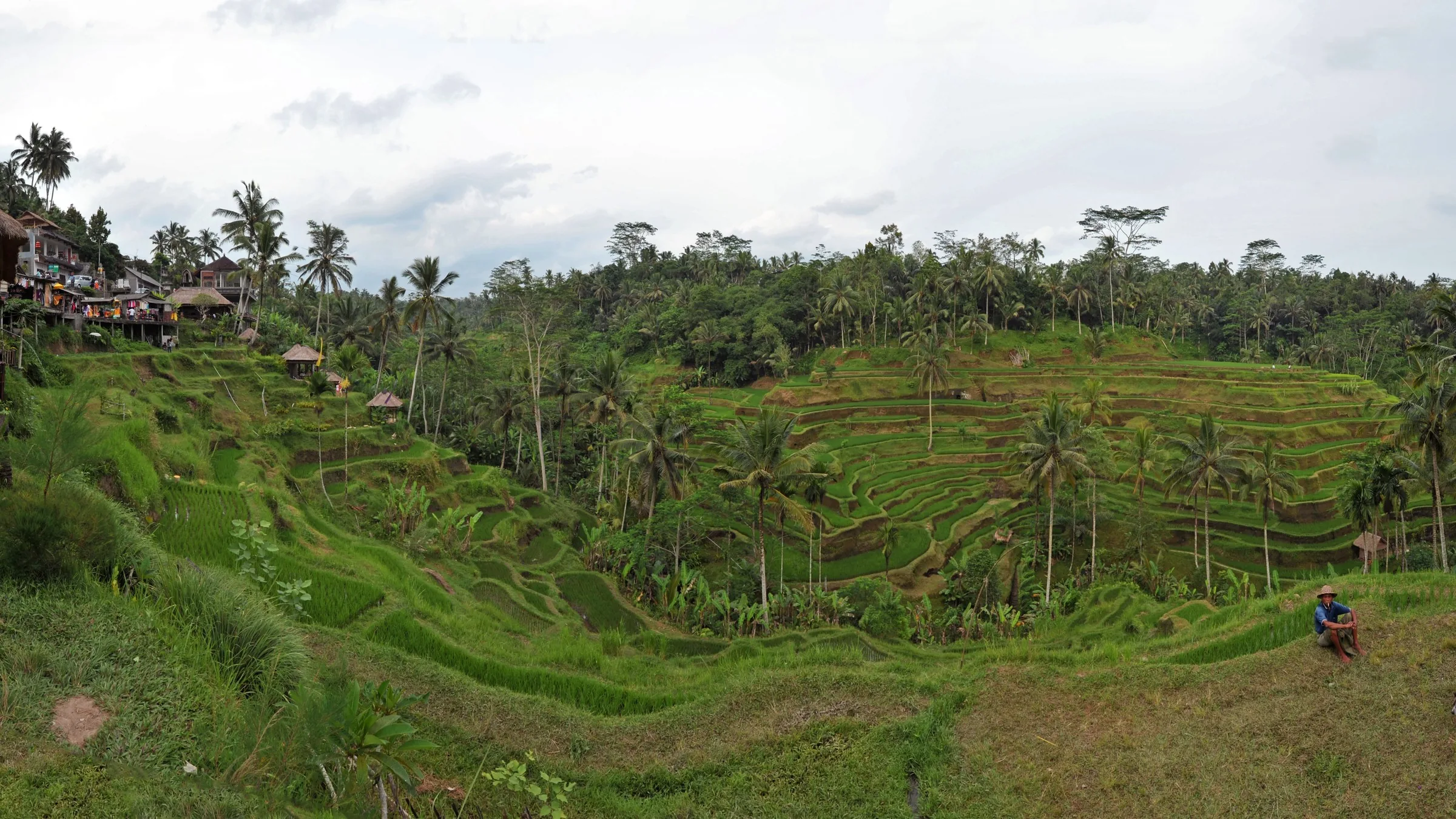
- Rice fields: depending on each subak’s cycle, flooded plots, bright green young shoots or forming ears. The spectacle is real, but the paths are muddy.
- Hikes: sunrise on Batur is often clouded over. Agung is not recommended in the heart of the rainy season. Walks in Sidemen are done in the morning.
- Roads and waterfalls: slippery surfaces, streets flooded in places in the south during big storms. Spectacular waterfalls, access sometimes closed.
Crowds and prices in January
The first days of January extend the holiday high season: accommodation full and rates at their highest. From the second week, visitor numbers drop markedly and prices come down to the lower average of the year, with frequent discounts on stays of several nights.
French school Christmas vacations end in early January, and New Year attracts many visitors from Australia and Asia. Australian summer vacations, however, run until late January: the south stays busy. Chinese New Year, whose date varies, falls in late January in some years and brings crowds back for a few days.
For accommodation, allow the top of the annual range until about January 6 or 7, then the bottom or middle afterwards. Details by profile are in the Bali travel budget guide, and the budget calculator lets you adjust for the season.
January events
January has no major fixed event in Bali, apart from New Year on January 1. Galungan and Kuningan, which come round every 210 days according to the Balinese calendar, fall in January in some years: check the year’s dates before you leave.
The Balinese calendar (pawukon) does not follow ours: the same festival changes month from one year to the next. During Galungan, the streets are lined with penjor and families return to their village. The meaning of these festivals is explained in Balinese temples and culture.
What to do in Bali in January
Focus on activities that make the most of the season: rice fields and temples around Ubud in the morning, the Sidemen valley, the calm beach of Sanur, diving in Amed when the sea allows. Keep the afternoons for things done under cover.
- Ubud: the Tegalalang rice fields or a walk above the Campuhan early in the morning, before the showers. See Ubud.
- Sanur: a calm base for families, a sea protected by the reef, a coastal promenade usable even in gray weather. See Sanur.
- Sidemen: the greenest valley in the east, best done as a morning walk with a local guide.
- Amed: diving and snorkeling on the driest coast of the island, with a two-day margin for the weather.
Who January is the right month for
January suits flexible travelers, small budgets after the holidays and lovers of green landscapes. It suits demanding divers, hikers aiming for the volcanoes and families who want the beach every day less well.
Families
Possible, with a calm base like Sanur and short days. Think about protection against mosquitoes, more numerous in the rainy season.
Surfers
The east coast works better than the Bukit. Beginners find waves all year round on the southern beaches.
Divers
Visibility often reduced. Amed and Tulamben remain the safest options; Nusa Penida depends on the sea.
Hikers
Batur remains doable, with no guarantee of a view. Prefer low-altitude walks in the rice fields.
Small budgets
A good month from the second week: cheaper rooms, negotiable on the spot for several nights.
Honeymoon
Possible if you like villas with a pool and slow days. Better not to bet everything on sea outings.
For a suitable first route, the 10-day itinerary starts with Ubud, reached from the airport by the airport → Ubud transfer. The packing list helps you not forget the rain poncho.
Frequently asked questions
Should you come to Bali in January?
Yes if you accept frequent showers and a flexible program. January offers a very green island and lower prices after the holidays. If the beach and diving are the priority, rather aim for the dry season.
What is the weather like in Bali in January?
Hot and humid: 30.9 °C average high and 25.1 °C average low at the airport. On average 388.4 mm of rain falls over 18.8 days, the highest total of the year.
Is January the rainy season in Bali?
Yes, it is the heart of the rainy season, which runs from about November to March. Showers often fall in the afternoon or evening, but several gray days in a row are possible.
Can you swim in Bali in January?
Yes, the water stays warm. The west coast is rougher and its beaches often receive litter in this season. Sanur, protected by the reef, and Amed are calmer.
Where to stay in Bali in January?
Ubud for the rice fields and sheltered activities, Sanur for a calm sea and a family base. Amed suits divers who keep a margin for the weather.
Sources
Figures and rules checked on October 17, 2026 against the sources below. Entry rules and fees change: always check them on the official websites before you leave.