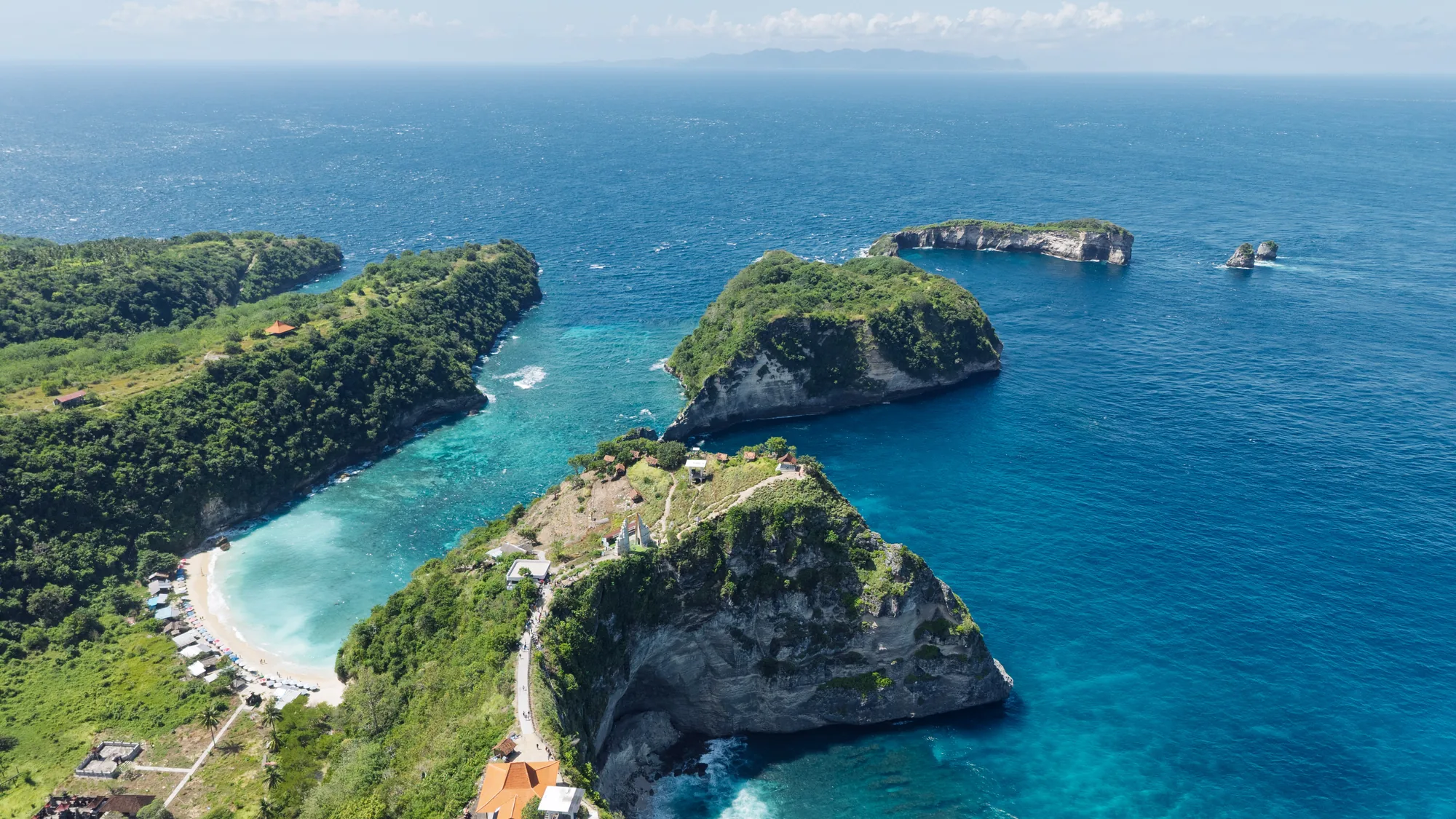
Place to see · Sidemen
Sidemen rice fields: Mount Agung’s terraces, without the crowds
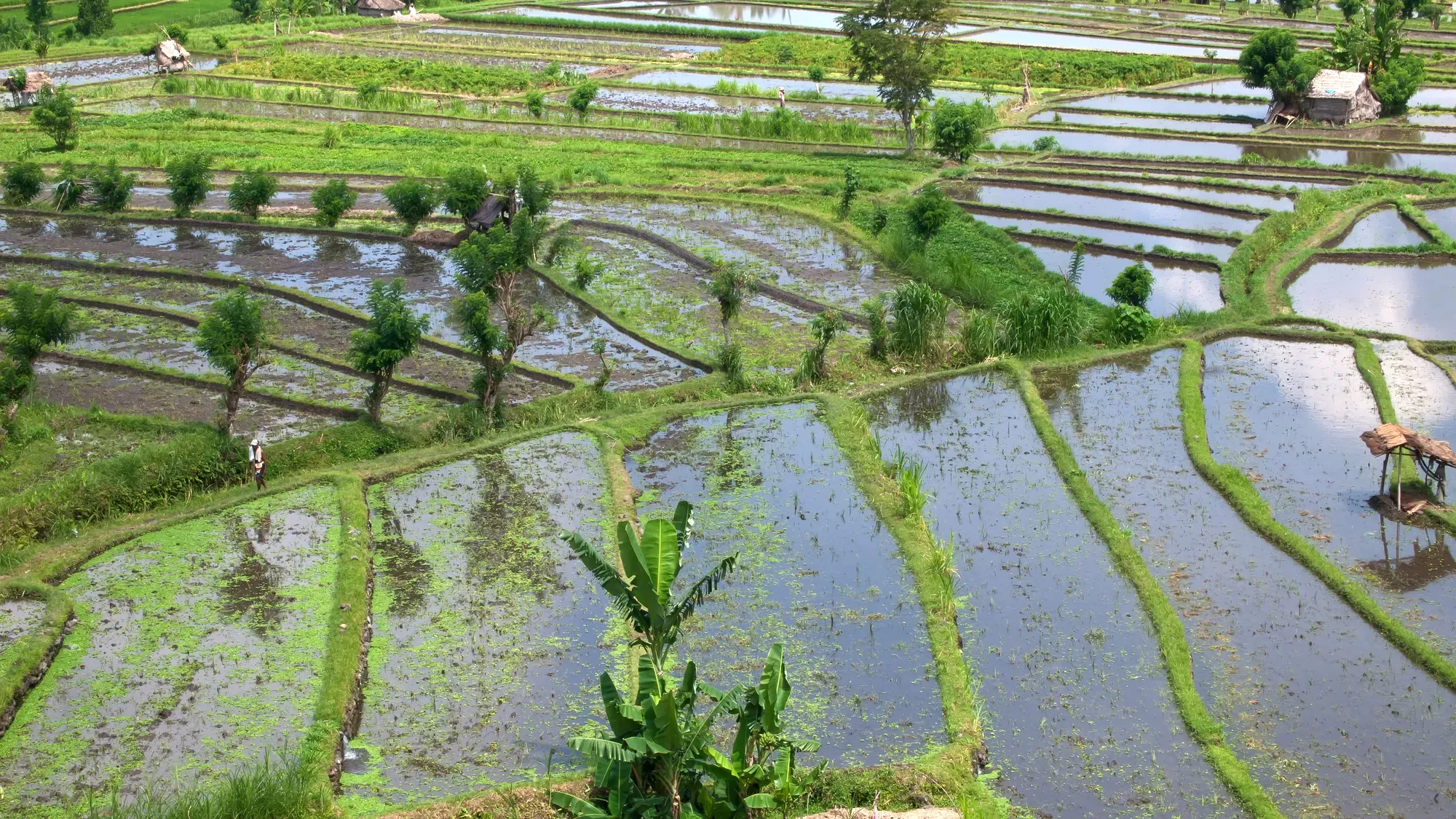
In the Sidemen valley, rice fields step down towards the river, with Mount Agung emerging in the morning. No ticket desk, no swings, hardly anyone: you walk along the bunds and footpaths between the plots, at the farmers’ pace.
- Updated on
- 3 min read
- By Kylian Dev
In short
Facts as of · sourced figures
You walk between the plots, along narrow bunds and dirt paths linking the hamlets, with Mount Agung in the background when the sky is clear. Depending on the season you see flooded, green or ripe fields, and sometimes the harvest by hand. You stop at a village warung.
Contents
Key points
- Working rice fields, with no entrance fee or photo props: respect the crops.
- Mount Agung is mostly visible early in the morning; clouds often rise later.
- Paths cross without waymarks: a village guide keeps you from getting lost.
- Allow 1.5 to 3 hours of walking, depending on the loop and the breaks.
The Sidemen terraces are watered by subak, like those of Tegallalang, but without mass tourism. You pass farmers, canals, rest huts and, in the villages, looms weaving songket.
To stay in the valley, see Sidemen; for other walks, hiking in Bali. From Ubud, read Ubud to Sidemen.
What you do in the rice fields
You walk between the plots, along narrow bunds and dirt paths linking the hamlets, with Mount Agung in the background when the sky is clear. Depending on the season you see flooded, green or ripe fields, and sometimes the harvest by hand. You stop at a village warung.
- The bunds between the plots: narrow and slippery after rain.
- The subak canals, passing water from one terrace to the next.
- The small field shrines, where farmers leave offerings.
- The village weaving workshops, along the way.
Getting there from Sidemen
The rice fields start at the edge of the village: from most of the valley’s accommodation you set off on foot. A local guide can be found through your guesthouse and knows the loops. By scooter, you reach the starting points along the valley road, which is narrow and steep.
- Ask your guesthouse for a loop or a village guide.
- Set off at sunrise, with water and shoes that grip.
- Follow the canals rather than the narrowest bunds.
- Head back before noon, when the heat rises and the clouds arrive.
When to go
Early in the morning, when Mount Agung clears and the light is at its best. Clouds often cover the summit from late morning. In the rainy season the fields are greener but the paths muddier. The rice cycle changes the view from month to month.
| Period | Fields | Walking |
|---|---|---|
| Dry season | Green to golden, depending on the cycle | Dry paths, Agung visible more often |
| Rainy season | Flooded or very green | Mud, afternoon showers |
To choose a month, see when to go to Bali.
What to pair it with
The Bukit Jambul viewpoint, on the road to Rendang, gives the overall view of the rice fields in twenty minutes. The Taman Ujung water palace, towards Karangasem, pairs with a move on to Amed. Both are reached by car from the valley.
- Bukit Jambul: the viewpoint over the rice fields, to the west.
- Taman Ujung: the Karangasem water palace, to the east.
Frequently asked questions
Do you pay to see the Sidemen rice fields?
There is no ticket desk: these are working fields. A guide is paid separately, at whatever rate you agree with them.
Can you walk without a guide?
Yes on the main paths, but they are not waymarked. A guide keeps you on track and explains the subak.
Sidemen or Tegallalang?
Tegallalang is more dramatic in photos, Sidemen calmer and more alive. If you want to walk alone, choose Sidemen.
Sources
Figures and rules checked on October 27, 2026 against the sources below. Entry rules and fees change: always check them on the official websites before you leave.