Place to see · Ubud
Tegallalang rice terraces: the famous view, best taken early
The Tegallalang terraces, in the village of Ceking, are the most photographed view in Bali. They are worth it before 9 a.m.; after that, tour buses, swings and selfie queues take over. Allow an hour on site, and pair it with Gunung Kawi further north.
- Updated on
- 3 min read
- By Kylian Dev
In short
Facts as of · sourced figures
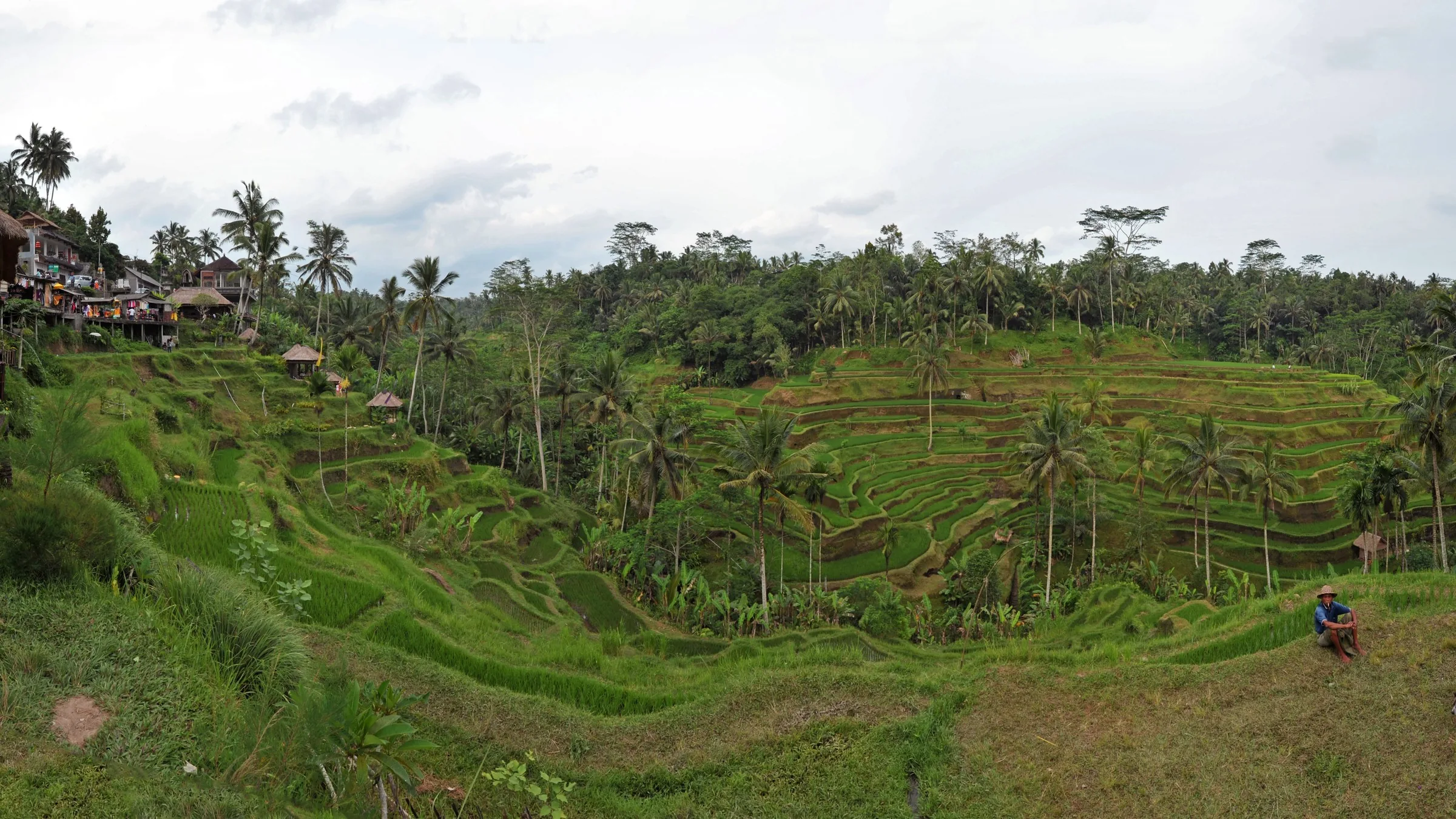
A valley of terraces, green or golden depending on the season, coconut palms on the ridges and a path that drops down and climbs the opposite slope. Two parallel roads run along the site, lined with cafés overlooking the view. Swings and photo props take up part of the terraces: you can ignore them.
Contents
Key points
- Arrive before 9 a.m.: from 9 a.m. to 4 p.m., crowds and buses clog the road and the paths.
- The entrance fee is posted at the main gate; on the paths, farmers ask for a small contribution.
- The swings and photo nests are private paid attractions, unrelated to the rice field.
- Allow 1 to 1.5 hours on site, more if you walk down to the bottom of the valley.
Tegallalang is a village north of Ubud; the famous terraces are at Ceking, on a hillside carved into an amphitheatre. They are watered by subak, the shared canal system that divides water between families. The scenery is real, and so is the crowd.
For other outings around Ubud, see things to do in Bali; for rice fields without swings, the Sidemen valley stays almost empty.
What you see at Tegallalang
A valley of terraces, green or golden depending on the season, coconut palms on the ridges and a path that drops down and climbs the opposite slope. Two parallel roads run along the site, lined with cafés overlooking the view. Swings and photo props take up part of the terraces: you can ignore them.
- The free viewpoint from the main road, café side: the full view without going down.
- The path into the valley: uneven steps, muddy patches in the rainy season, small footbridges.
- Swings and nests: private attractions, priced separately, with queues around midday.
- The rice itself: depending on the cycle, flooded, green, ripe or harvested. The view changes month to month.
Getting there from Ubud
Tegallalang lies north of central Ubud, on the road that climbs towards Kintamani. By scooter or with a driver, the ride is short early in the morning and gets much longer once the tour buses arrive. Parking is along the road, in lots run by the village.
- Leave central Ubud heading north, towards Tegallalang and Kintamani.
- Look for the strip of roadside cafés at Ceking: that is the main entrance.
- Park in a village lot rather than on the narrow, busy shoulder.
- Walk down in closed shoes, with water, keeping an eye on the time for the climb back.
Scooter or driver: see getting around Bali.
When to go
Sunrise is the only truly pleasant slot: low light, cool air and empty paths. From 9 a.m. to 4 p.m., the crowd is thick and the heat strong. Late afternoon calms down a little. In the rainy season, the steps get slippery and showers often arrive after midday.
| Slot | Crowd | Light | Note |
|---|---|---|---|
| Sunrise to 9 a.m. | Light | Soft, side-lit | The best time |
| 9 a.m. to 4 p.m. | Very heavy | Harsh, overhead | Queues at the swings, busy road |
| After 4 p.m. | Moderate | Warm | Frequent showers in the rainy season |
The rice cycle matters as much as the hour: see the month pages in when to go to Bali for the state of the fields by season.
What to pair it with
Tegallalang chains well with the rock-cut shrines of Gunung Kawi, further north on the same road, then with the water temple of Tirta Empul. One morning is enough for all three if you leave early. Back in town, keep the Campuhan ridge for another sunrise.
- Gunung Kawi: shrines carved into the rock, at the bottom of a valley.
- Campuhan ridge: a free walk a few steps from central Ubud.
Frequently asked questions
Do you have to pay to see the Tegallalang rice terraces?
Yes: an entrance fee at the main gate, posted on site, then small contributions asked by farmers along the paths. The swings are paid separately.
How much time should I allow?
Allow 1 to 1.5 hours on site. Walking down into the valley, climbing back in the sun and queuing for the swings all add time.
Is Tegallalang a UNESCO site?
No. The UNESCO-listed subak cultural landscape covers other sites, including the Jatiluwih terraces. Tegallalang uses the same irrigation system without being part of the listed property.
Sources
Figures and rules checked on October 27, 2026 against the sources below. Entry rules and fees change: always check them on the official websites before you leave.