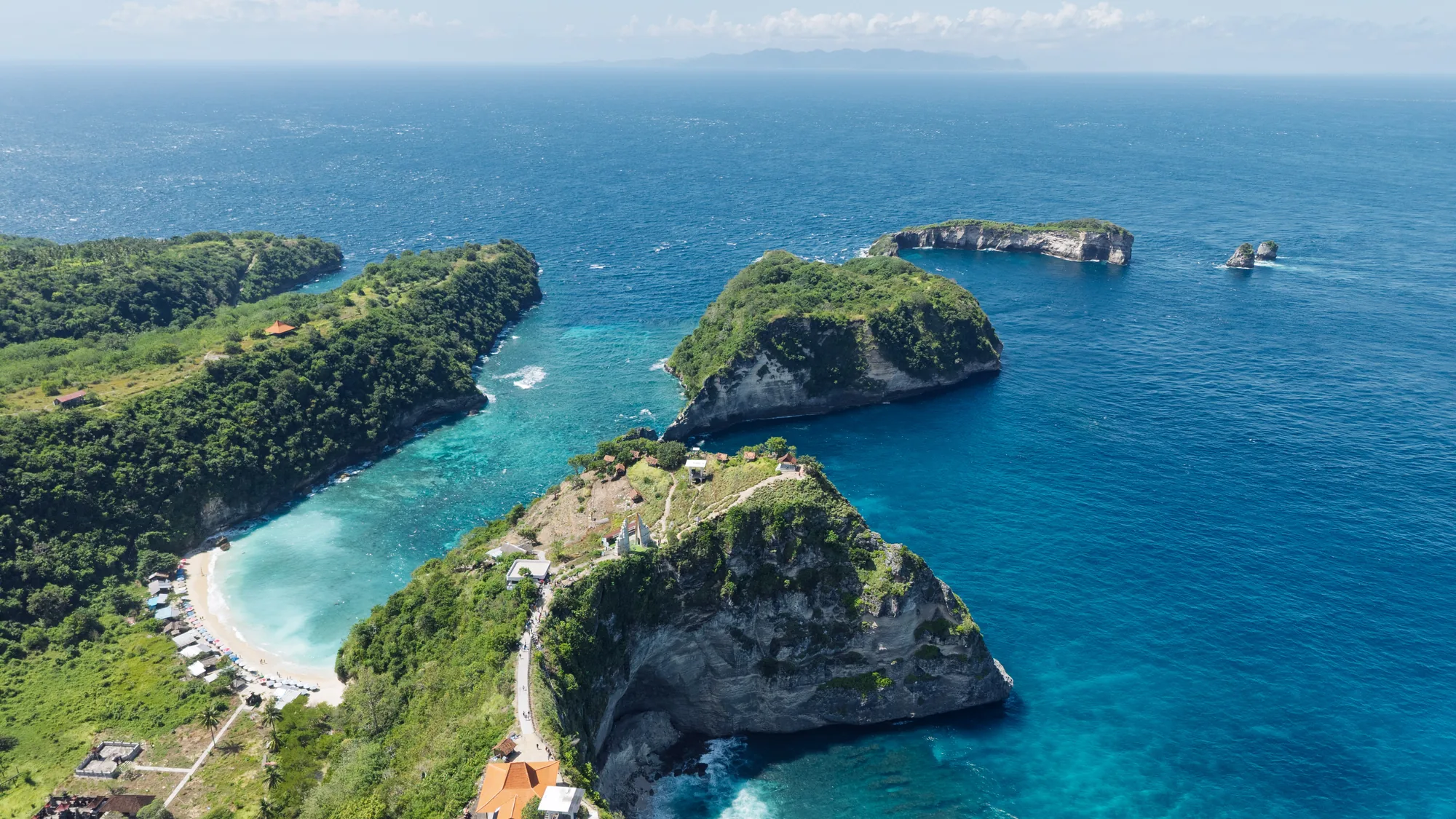
Place to see · Uluwatu
Suluban: down through the cliff, to the foot of the wave
Suluban, also called Blue Point, is the beach of the Uluwatu surf break. You go down steps between warungs clinging to the cliff, then through a crack in the rock to small caves opening onto the sea. At high tide there is almost no sand left.
- Updated on
- 3 min read
- By Kylian Dev
In short
Facts as of · sourced figures
You walk down the steps between the warungs, pass through the crevice and come out on a small beach among the rocks, with caves open to the ocean. At low tide you can walk a little between the rocks. The rest of the time, you watch the surf from a terrace above the water.
Contents
Key points
- You go down steep steps, then through a narrow crevice in the rock.
- At high tide, access to the sand shrinks sharply: check the tide before you come.
- The waves are powerful: you watch the surf, you do not swim here as in Sanur.
- The warungs above are the best vantage point; allow 1 to 2.5 hours.
Suluban is first of all a gateway to the Uluwatu wave, one of the best known on the island. Warungs and small terraces have grown on the cliff above the break. For non-surfers, the appeal is the setting: the descent, the caves and the view down onto the waves.
To understand the peninsula’s spots, read surfing in Bali.
What you do at Suluban
You walk down the steps between the warungs, pass through the crevice and come out on a small beach among the rocks, with caves open to the ocean. At low tide you can walk a little between the rocks. The rest of the time, you watch the surf from a terrace above the water.
- The warung terraces above the break: the view of the wave.
- The crevice in the cliff, narrow and damp, leading to the sand.
- The caves and the patch of beach, to see at low tide.
- Surfers coming back the same way, board under the arm.
Getting there from Uluwatu
Suluban is near Uluwatu Temple, at the end of a small road running down towards the sea. You park at the top, then everything is on foot down the steps, steep in places. A scooter is most practical; drivers know the entrance as Blue Point.
- Follow the Suluban or Blue Point signs from the main road.
- Park at the top; parking and an access fee may be asked, with the price told on site.
- Walk down the steps between the warungs, ideally in closed shoes.
When to go
At low tide, to reach the sand and the caves; check the tide time on the day. Late afternoon is beautiful from the terraces, before heading to the temple for sunset. In the dry season the swell is more consistent and the spot busier.
| Tide | Access to the sand | For whom |
|---|---|---|
| Low | Beach and caves reachable | The curious, photographers |
| High | Very limited | Surfers, spectators on the terraces |
What to pair it with
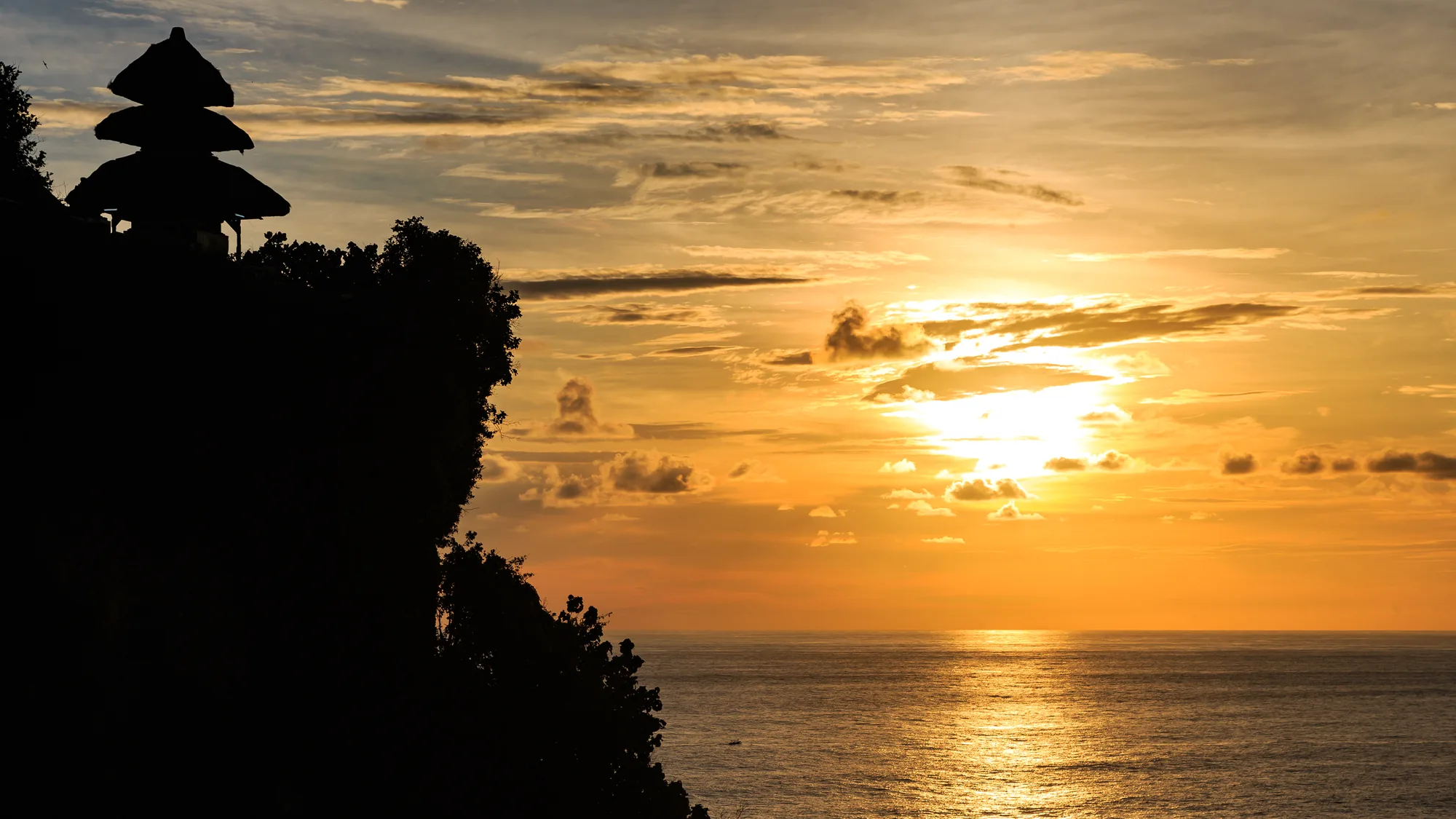
Uluwatu Temple is right next door: Suluban at low tide in late afternoon, then the cliffs and the kecak at sunset. Padang Padang, a little further north, is the beach where you can actually settle in on the sand and swim on calm days.
- Pura Luhur Uluwatu: the cliff temple, minutes away.
- Padang Padang: the cove for swimming on calm days.
Frequently asked questions
Can you swim at Suluban?
Not really: the waves are powerful and the bottom rocky. For a swim, choose Padang Padang on a calm day.
Are Suluban and Blue Point the same place?
Yes. Blue Point is the common name for the warung area at the top of the cliff.
Is the way down difficult?
The steps are steep and the crevice narrow. Fine for confident walkers; not advised with young children.
Sources
Figures and rules checked on October 27, 2026 against the sources below. Entry rules and fees change: always check them on the official websites before you leave.